

Manage the Contract
Photo: Nature Trails

Successful trail projects depend on clear communication, coordination, and consistent oversight throughout implementation. Effective contract management helps keep work on track while allowing for adjustments when field conditions or other challenges arise.
Key elements include:
Clear roles, responsibilities, and communication
Coordination and oversight of project activities
Managing changes, unexpected conditions, and schedules
Transparent pricing, invoicing, and timely payments
Collaborative problem-solving and accountability
Establish Communication and Responsibilities
Clear communication and defined responsibilities help prevent misunderstandings, resolve issues quickly, and keep trail projects moving forward.
Identify key contacts: Establish primary points of contact for the project owner, contractor, and other involved parties, including who has authority to make decisions and approve changes.
Set communication expectations: Agree on how often project updates, meetings, and site visits will occur and how information will be shared.
Clarify roles and responsibilities: Confirm who is responsible for site access, permits, materials, inspections, coordination with other crews, and other project requirements.
Coordinate with other stakeholders: Establish procedures for communicating with land managers, agency staff, volunteers, conservation corps, and other contractors working on or near the project.
Address issues promptly: Encourage open dialogue and timely decisions when questions, conflicts, or unexpected conditions arise.
Regular communication and collaborative problem-solving help maintain accountability and build a productive working relationship throughout the project.
Monitor Progress and Quality
Regular field oversight helps ensure that work meets project expectations, identifies issues early, and supports timely decisions throughout construction. Progress reviews may also be tied to invoicing and payment approvals.
Monitor progress: Track completed work against the agreed-upon scope, schedule, and milestones. Identify potential delays early and discuss adjustments as needed.
Conduct regular site reviews: Schedule check-ins based on the project's needs and contract terms. These may be biweekly, monthly, or tied to specific milestones or payment requests.
Verify completed work: Confirm that work meets project specifications, approved plans, and expected performance, including trail-specific elements such as drainage, grades, tread construction, and structures.
Document progress and deficiencies: Maintain records of completed work, inspections, and decisions. Use photos and punch lists, when appropriate, to identify items requiring correction.
Coordinate payment approvals: Use progress reviews to verify completed work and support timely approval of invoices, consistent with the contract's payment terms.
Address deficiencies promptly: Communicate concerns, agree on corrective actions, and verify that corrections are completed.
Oversight should be appropriate to the project's complexity and contracting approach, balancing accountability with the contractor's professional expertise.
Manage Changes and Unexpected Conditions
Trail construction often requires adjustments in the field. Establishing a clear process for managing changes helps keep projects moving while maintaining accountability for costs, schedules, and outcomes.
Anticipate field adjustments: Recognize that some changes are a normal part of trail construction, even with thorough planning and detailed designs.
Allow flexibility within the trail corridor: Where appropriate, establish an approved corridor that allows the contractor to make minor alignment adjustments in response to actual field conditions, while respecting environmental and permitting constraints.
Communicate changes early: Discuss unexpected conditions, proposed solutions, and potential impacts on costs or schedules before proceeding with work outside the agreed-upon scope.
Follow change approval procedures: Confirm who has authority to approve changes and when written change orders or other documentation are required.
Document cost and schedule impacts: Record changes to quantities, materials, construction methods, deliverables, or timelines, including agreed-upon adjustments to compensation.
Distinguish field decisions from contract changes: Clarify which adjustments fall within the contractor's authority and which require formal approval.
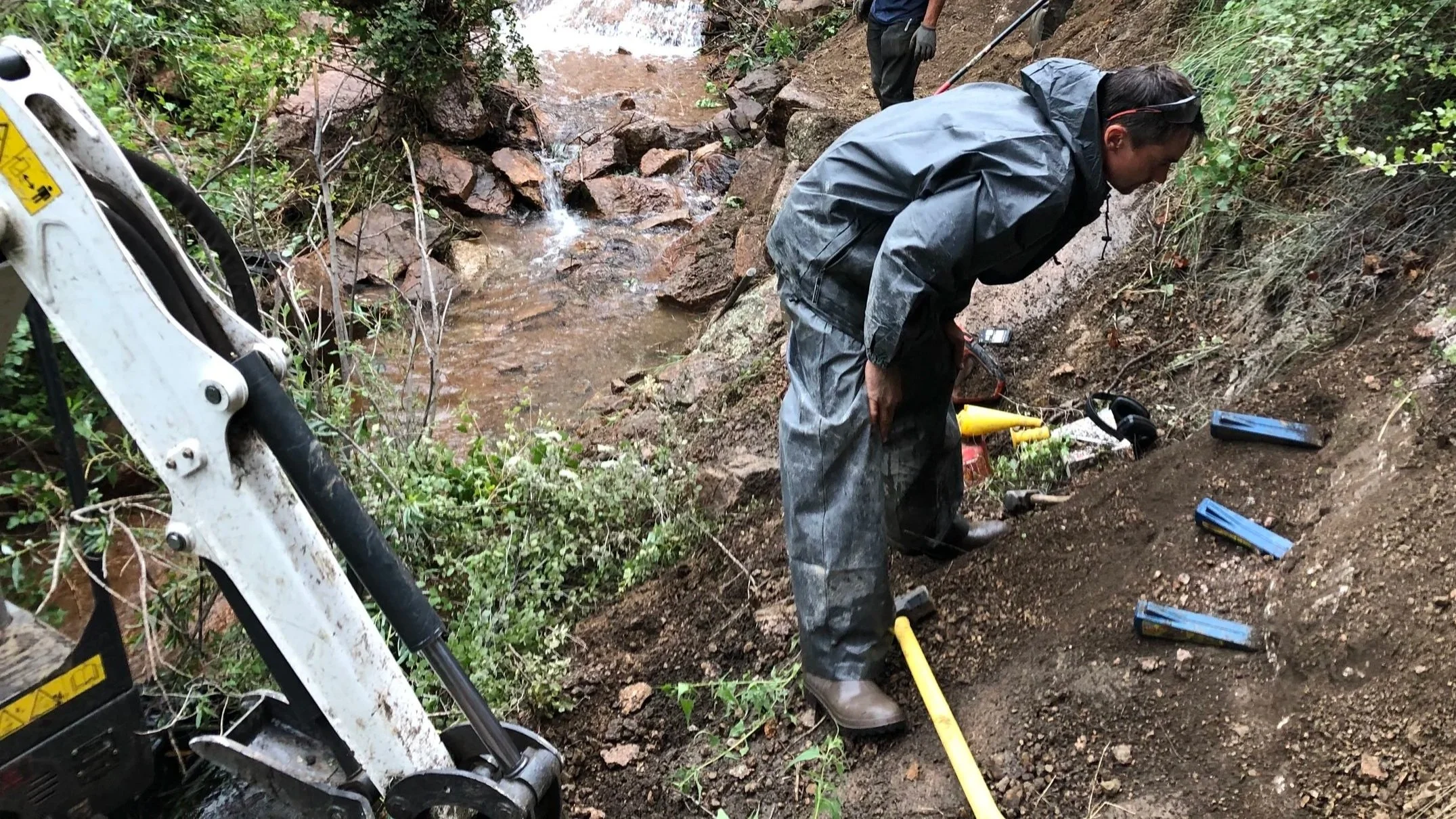
Field Conditions: Expect the Unexpected
Even with thorough planning and design, not everything can be anticipated before construction begins. Once excavation starts, contractors may encounter unexpected rock, unsuitable soils, buried obstacles, or groundwater. Heavy rainfall or changing site conditions can also affect construction methods and schedules.
Trail construction takes place in dynamic natural environments, and some conditions only become apparent once work is underway. Providing appropriate flexibility within an approved trail corridor, maintaining open communication, and establishing clear procedures for changes can help contractors adapt while protecting project goals, budgets, and environmental resources.
Learn more: Understanding Trail Construction — including field-fit construction, construction corridors, and factors that can affect project schedules.
Photo: FlowRide Concepts
Manage Payments and Invoicing
Timely payments and clear communication are essential to successful trail projects. Many professional trail contractors are small businesses, and payment delays can create significant cash flow challenges.
Review invoices promptly: Verify completed work against agreed-upon milestones, quantities, or progress reviews, and process invoices within the contract's payment terms.
Communicate payment delays: If grant reimbursements, internal approvals, or other administrative processes cause delays, communicate proactively with the contractor.
Address corrections fairly: Document deficiencies and establish expectations and timelines for corrections. Avoid withholding payment for otherwise acceptable work over minor outstanding items, where permitted by the contract. Follow up on unresolved corrections before approving subsequent payments, as appropriate.
Resolve payment questions quickly: Address discrepancies in quantities, costs, change orders, or documentation before they become larger issues.
Track payments and changes: Maintain accurate records of invoices, approved changes, payments made, and remaining contract balances.
Next Step: Close out the Project
As construction nears completion, the final step is to inspect and accept the completed work, address outstanding items, finalize payments and documentation, and prepare for ongoing trail maintenance and management.