

Understanding Trail Construction
Trail construction looks very different from building, roadway, and other conventional construction projects.
Photo: Allegra Trails
Trail Construction Is Specialized Work
Trail construction combines skilled fieldwork, specialized equipment, and site-specific construction techniques.
Construction methods vary with terrain, soils and geology, vegetation, access, intended trail use, design requirements, and other site constraints. Trail construction also requires skilled field decision-making as work responds to actual conditions on the ground.

Photo: OBP Trailworks
Trail-Sized Equipment
Professional trail construction uses compact, trail-sized equipment that can work within relatively narrow construction corridors and access areas. The equipment used depends on the work, terrain, access, materials, and site constraints.
Common trail-sized equipment may include:
Mini excavators
Compact track loaders and mini skid steers
Tracked material carriers
Small dozers
Compaction equipment
Specialized attachments for excavation, grading, rockwork, and material handling
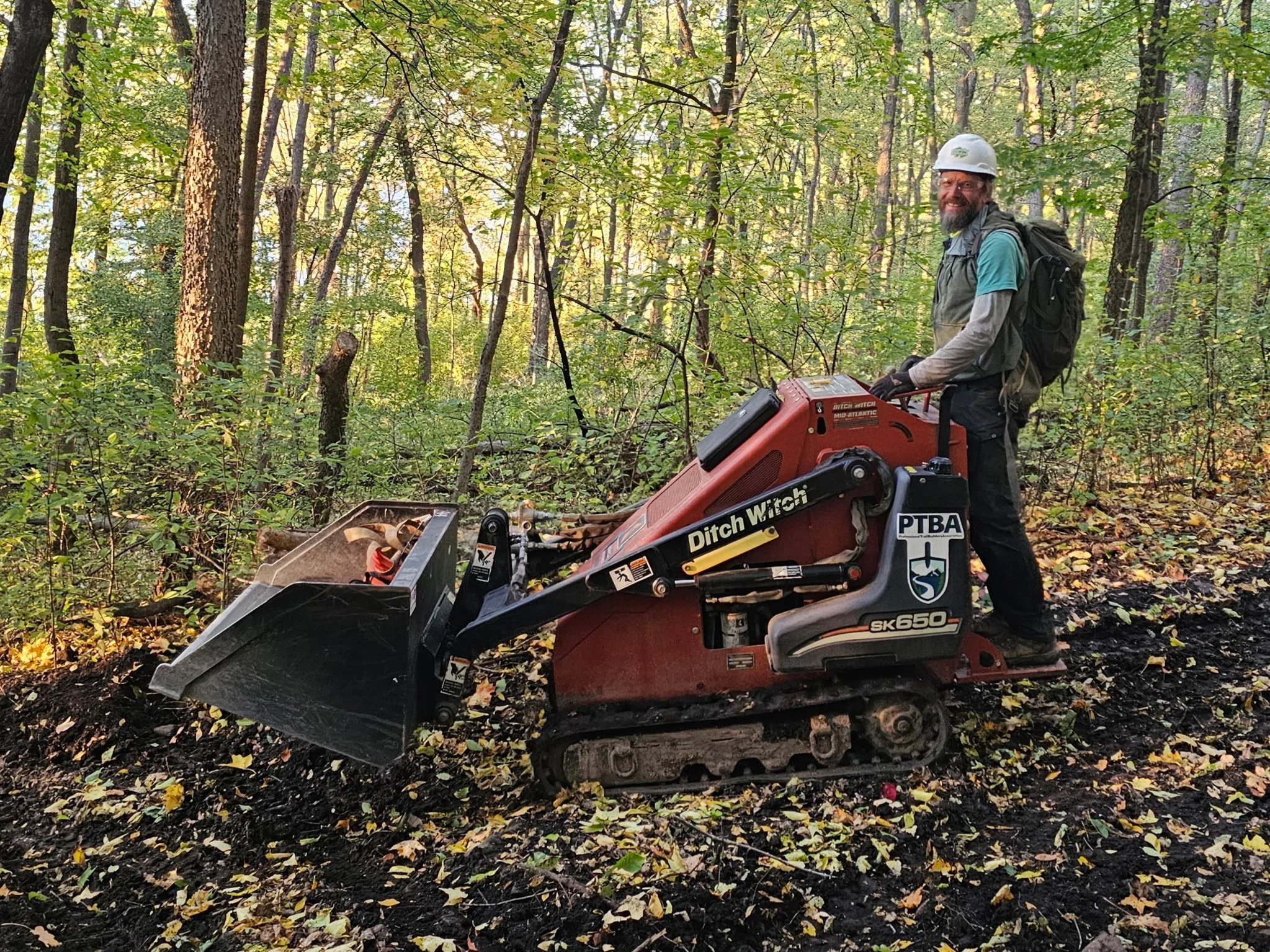
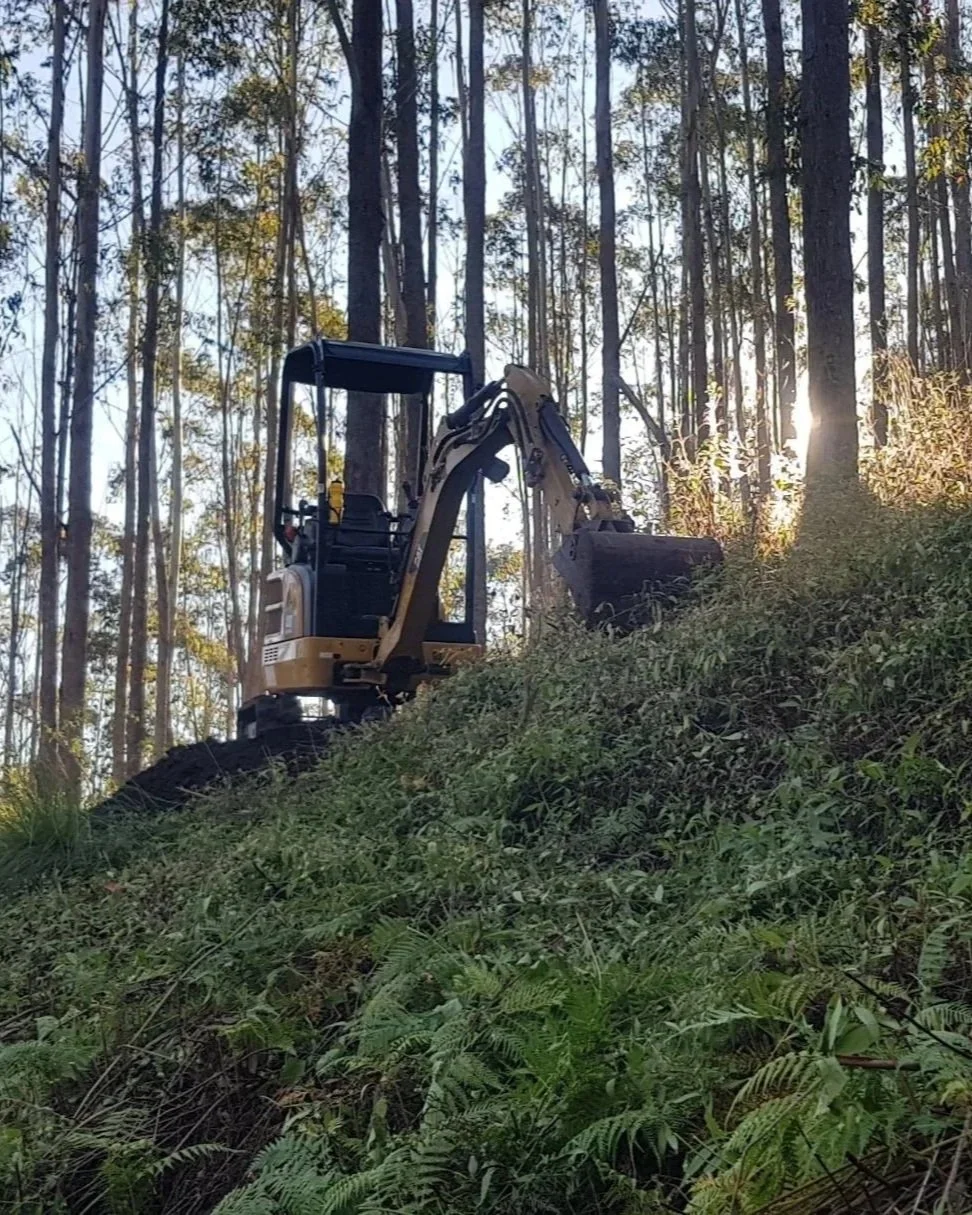
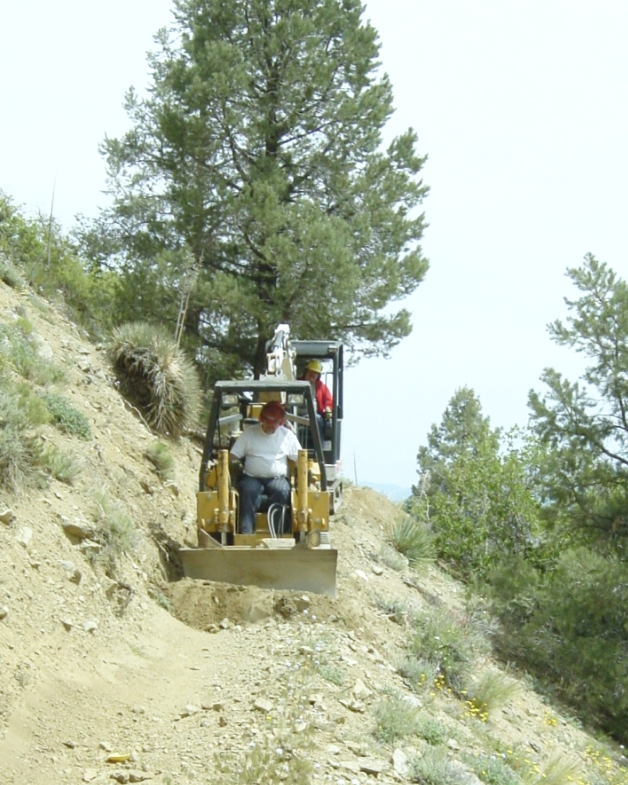
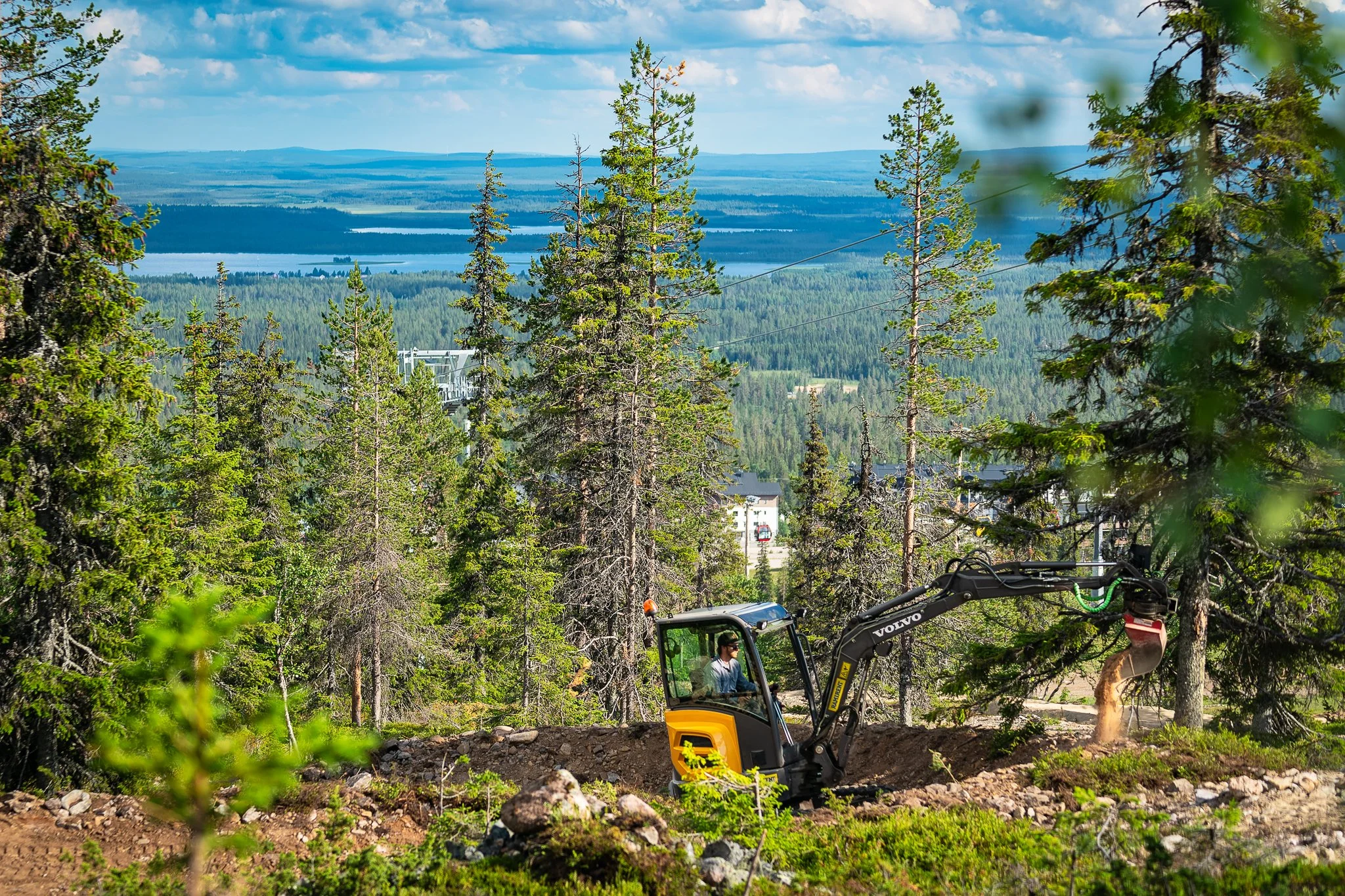
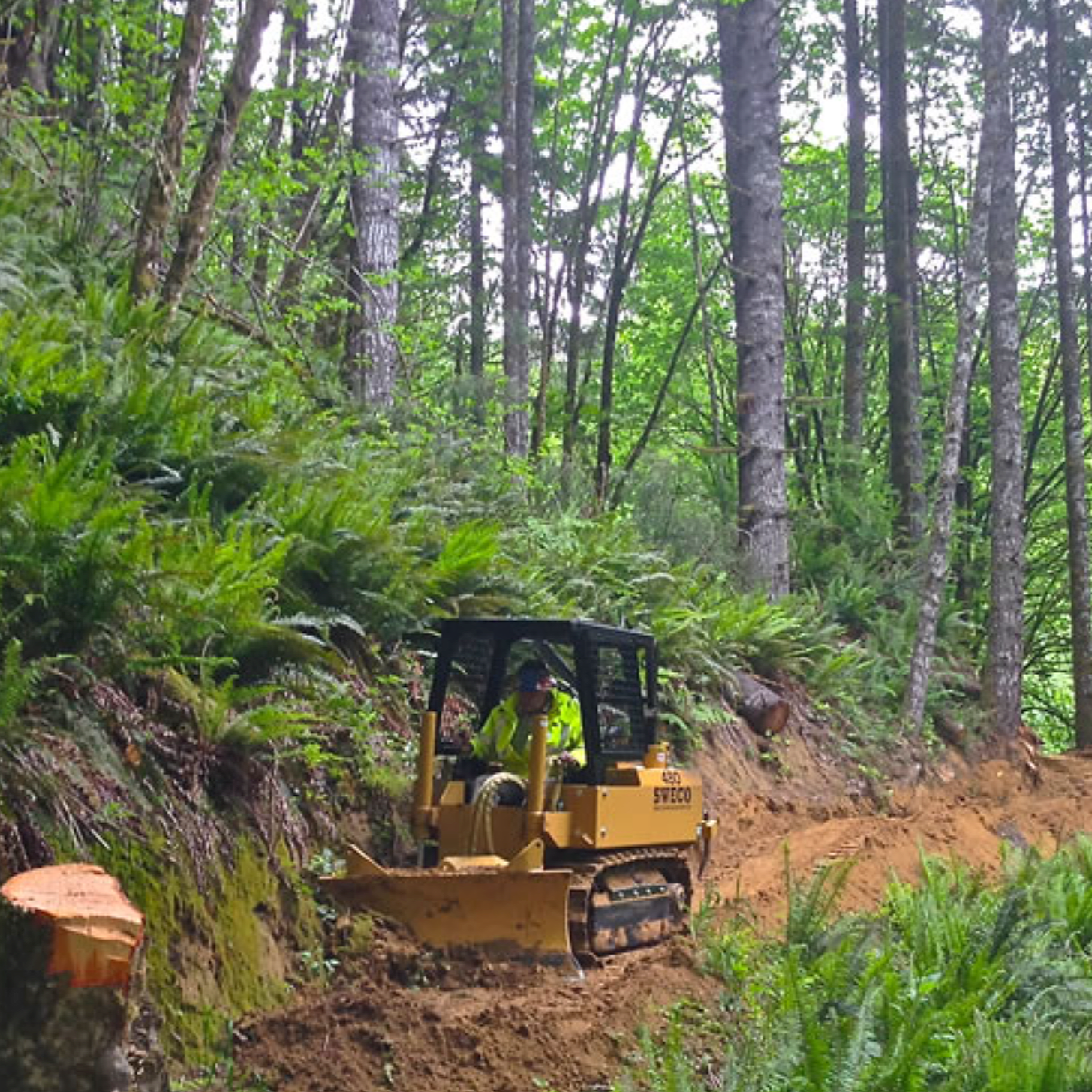
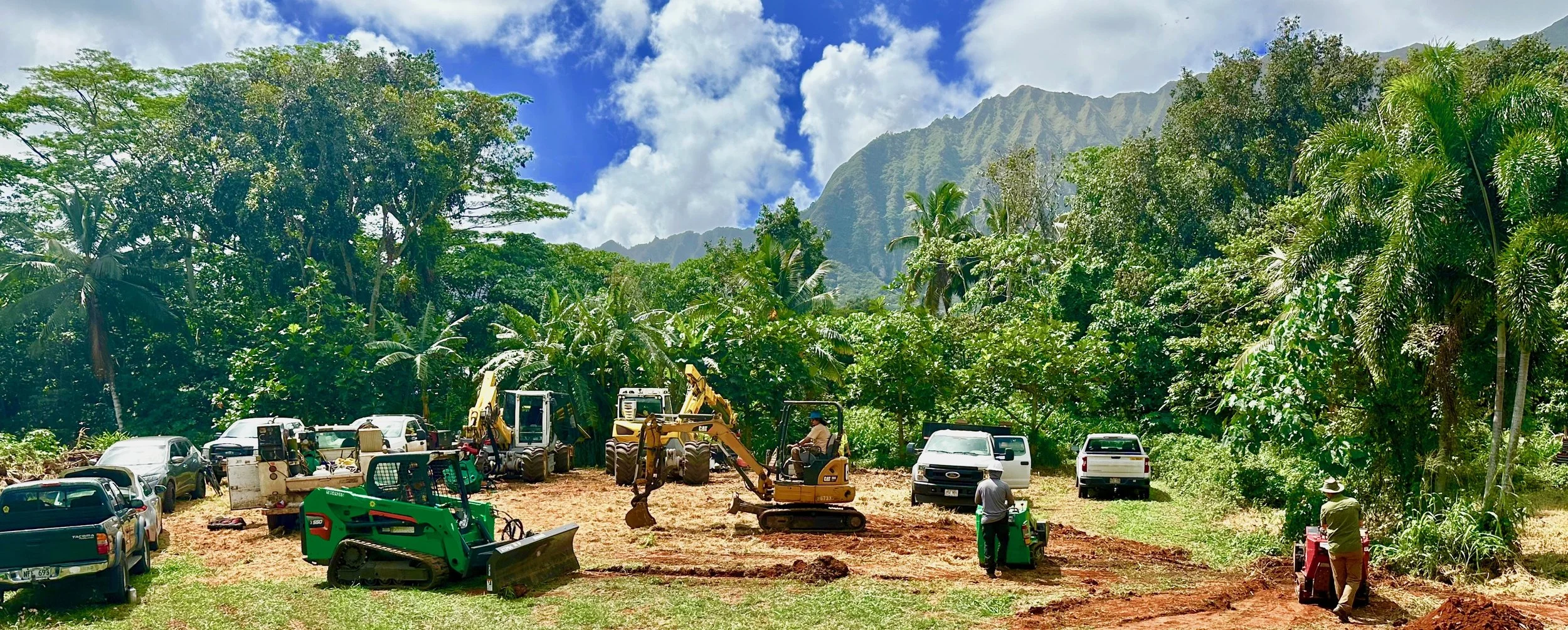
Photos: Great Lakes Trailbuilders, Destination Trail, Trails Unlimited, Tony Boone Trails, Community Trail Design
Learn More about Equipment
Hand Tools Are Essential to Trail Construction
Mechanized equipment may move a lot of material, but hand tools are used throughout trail construction for the detailed work that shapes and finishes the trail.
Hand tools are used to:
Shape and finish trail tread
Build drainage features
Set and finish rockwork
Construct details and features
Work in tight or inaccessible areas, or where mechanized equipment is limited or prohibited
Most trail projects use hand tools and mechanized equipment together, with each suited to different parts of the work.
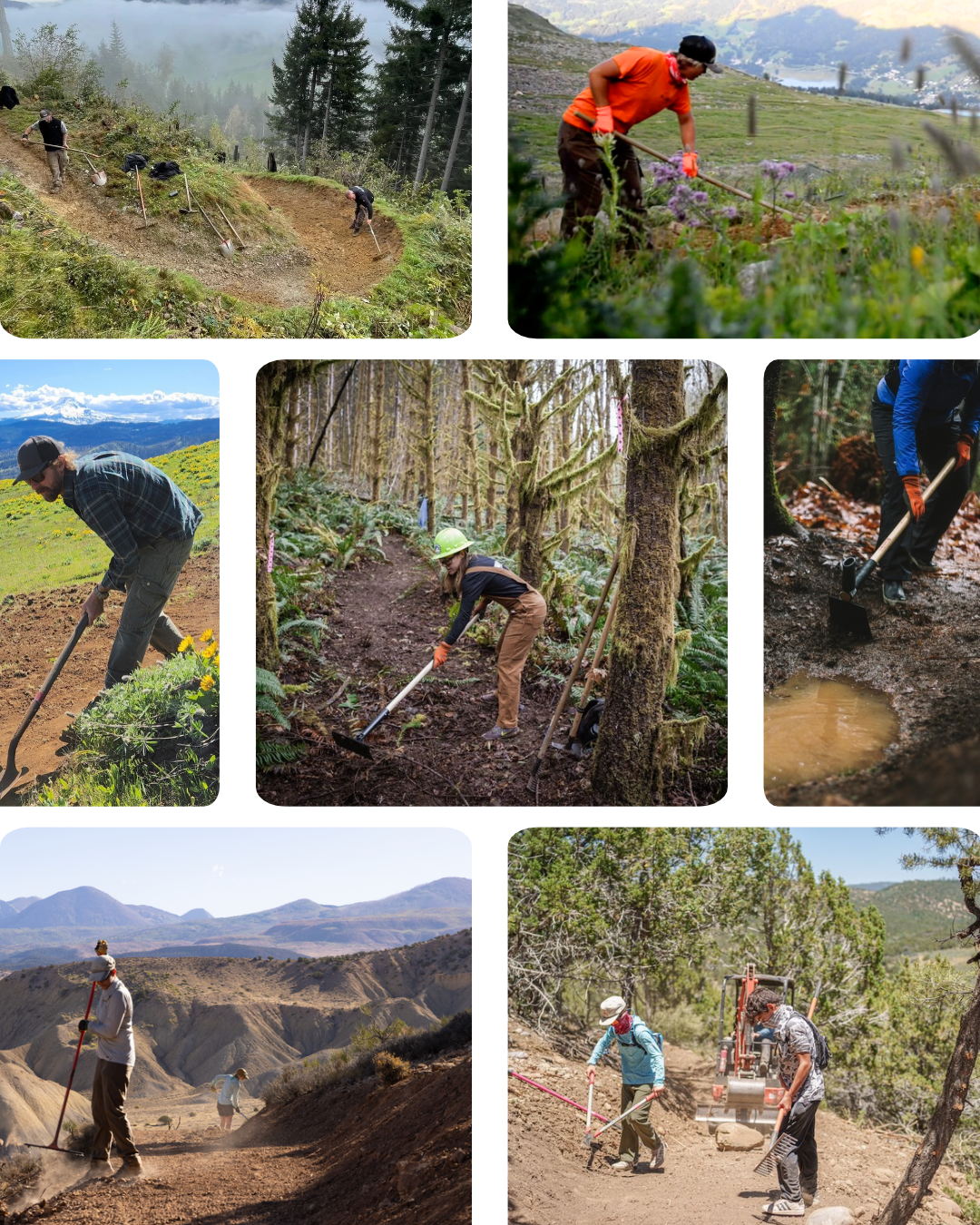
Photos: Allegra Trails, Camelot Tools, Dirt Tek Trails, Progressive Trail Design
Construction Footprint: Linear and Dispersed
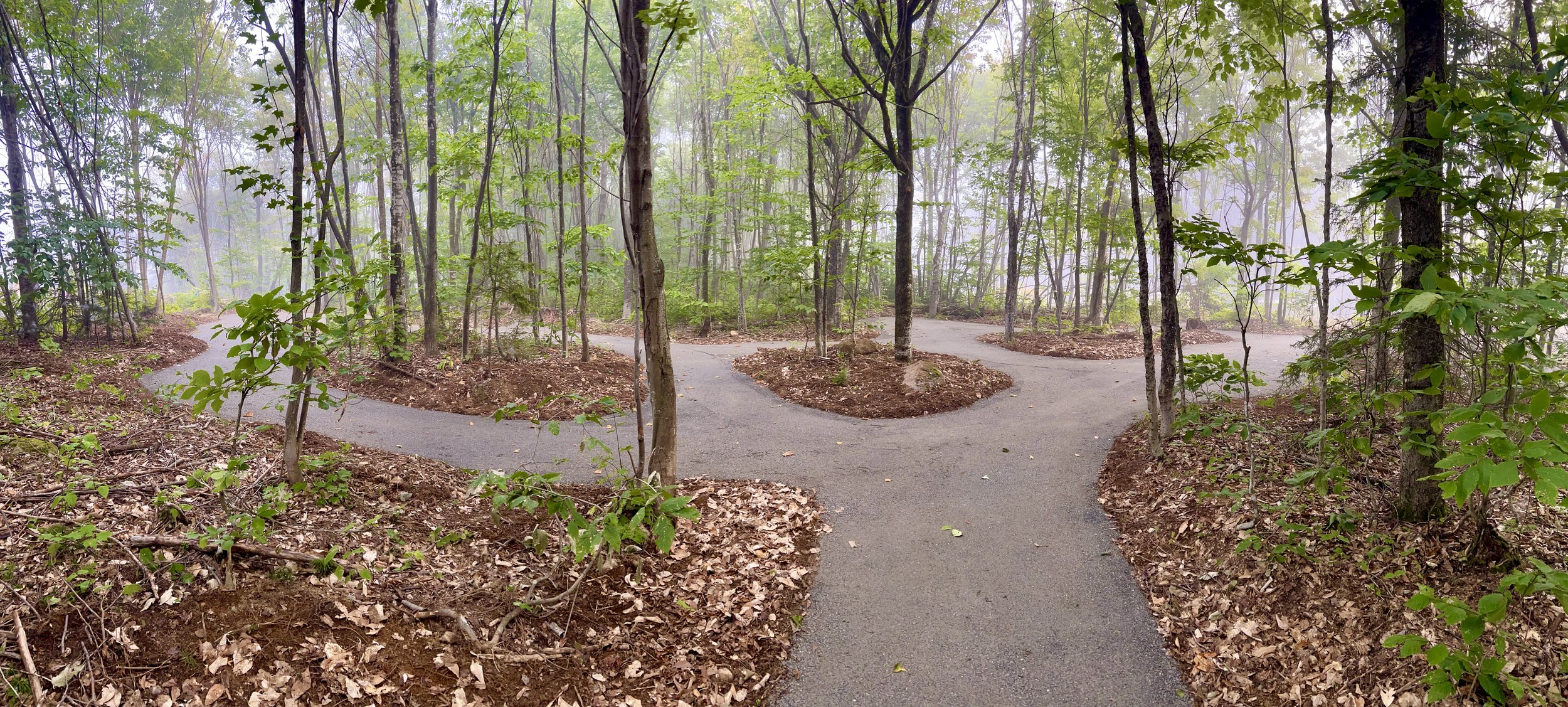
Unlike a conventional construction site, trail construction typically has a relatively narrow, linear construction footprint, with work moving along the trail as construction progresses.
The construction footprint is wider than the finished trail tread, but typically only as wide as needed for crews, equipment, materials, and construction activities.
A trail may be field-fit within a much wider approved corridor. That does not mean the entire corridor is cleared or disturbed.
Clearing and disturbance are typically limited to the area needed to construct the trail. Trees and vegetation outside that area are protected, and vegetation within it may be selectively retained. In forested settings, much of the existing tree canopy can often remain.
Bike parks, pump tracks, skills areas, and other trail facilities may have a more concentrated construction footprint and involve greater grading or disturbance.
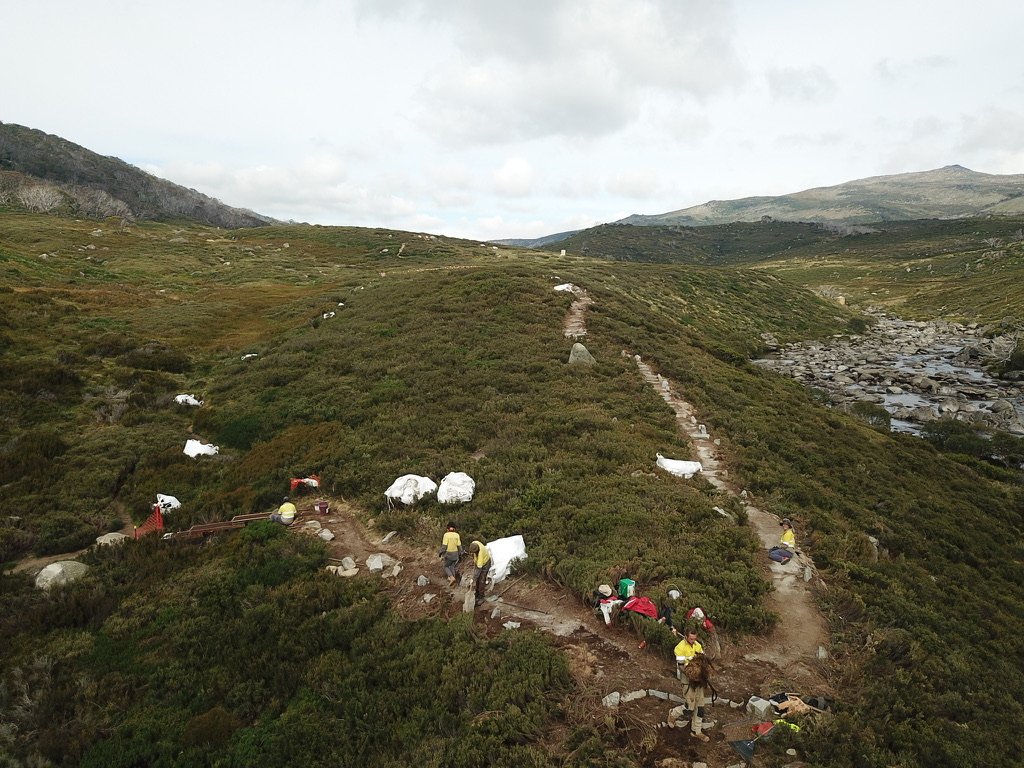

Photos: CreativeLines, OBP Trailworks
Excavation, Soil Disturbance & Stabilization
Trail construction often involves excavating and reshaping soil and rock to create a stable trail tread, manage drainage, and construct other features.
Excavated material may be reused, distributed, or removed from the site depending on its suitability and project requirements. Exposed soils and disturbed slopes may require stabilization to reduce erosion.
Where appropriate, preserving and reusing native soils, vegetation, and the existing native seed bank can support natural revegetation and help disturbed areas recover without introducing non-native species. Stabilization and restoration activities are typically incorporated throughout construction.
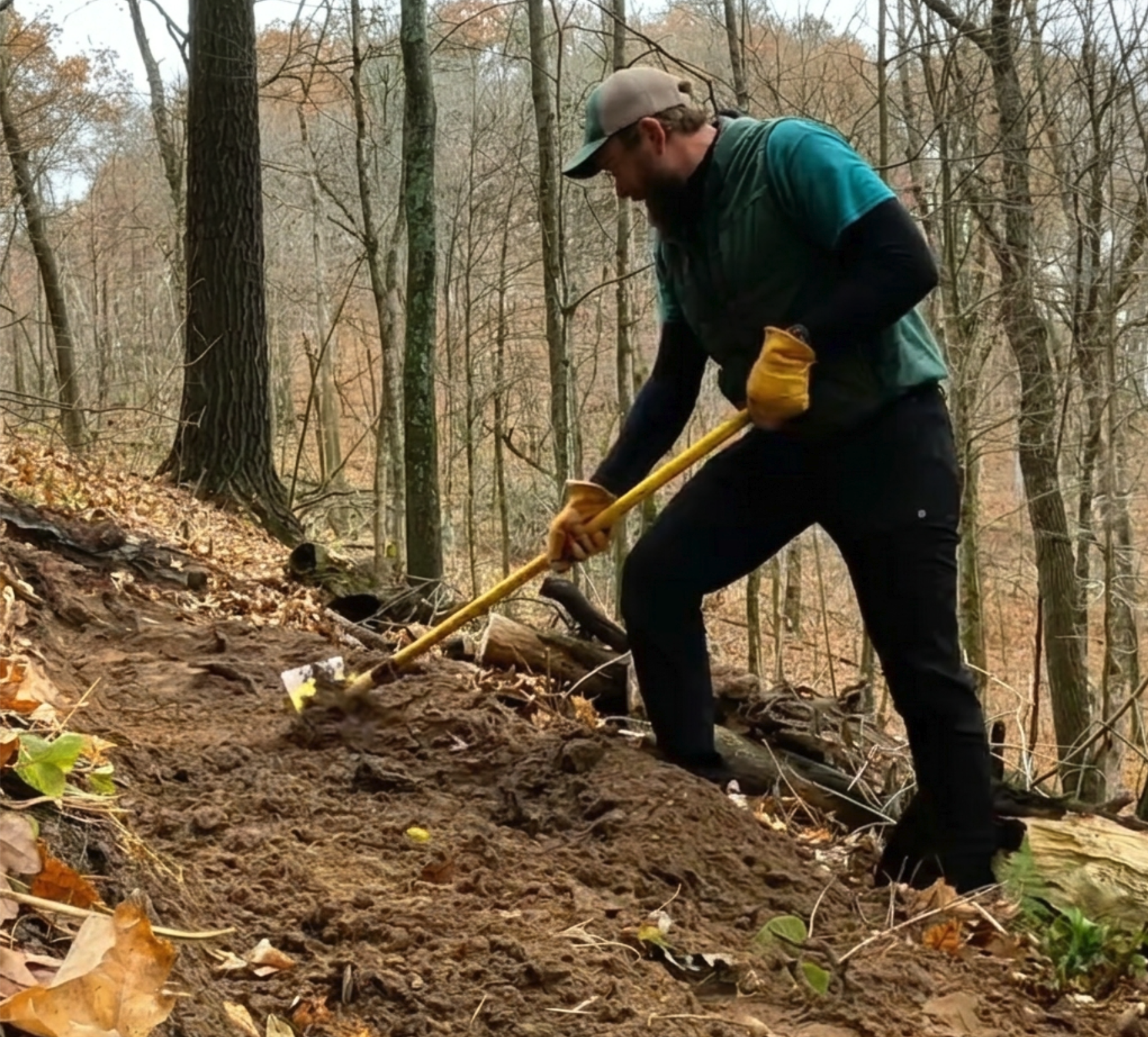
Photo: Great Lakes Trailbuilders
Environmental Requirements & Permitting
Trail construction may be subject to environmental reviews, permits, approvals, and other requirements that influence where, when, and how work occurs.
Depending on the project and location, requirements may address vegetation removal, soil disturbance, erosion and sediment control, waterways and wetlands, wildlife and habitat protection, cultural resources, construction access, and seasonal restrictions. Some projects may also require inspections, monitoring, or additional approvals during construction.
Understanding these requirements before construction begins helps project owners and trail professionals plan the work, establish realistic schedules, and maintain compliance.
Learn more: Trail Project Life Cycle – Permitting, Approvals + Compliance
Getting crews, equipment, and materials to the work site can be a significant part of trail construction.
Materials may be moved by hand, trail-sized carriers and other equipment, or—in remote locations—by helicopter. Access, staging, hauling distances, and material sources can all affect construction methods, schedule, and cost.
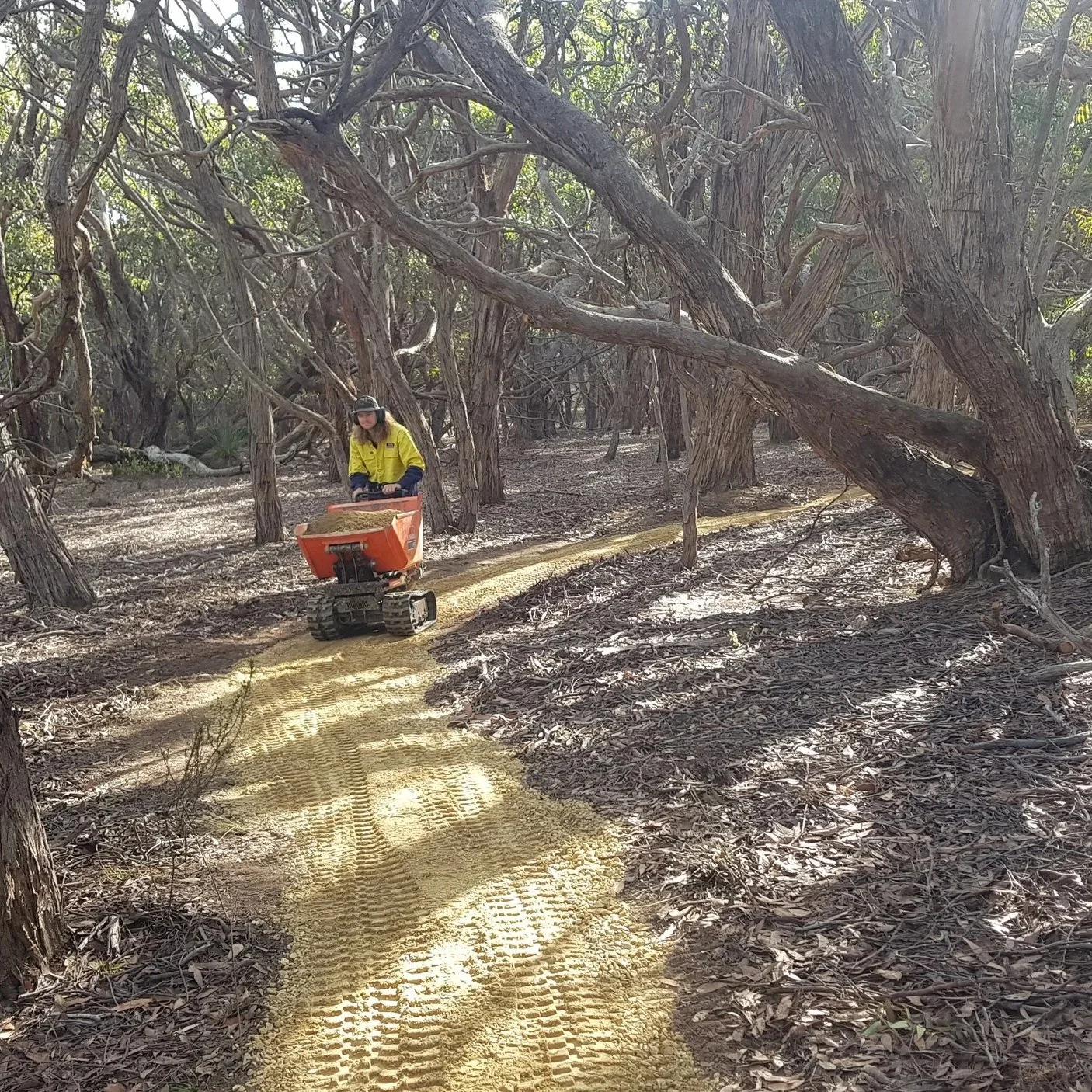
Access + Moving Materials
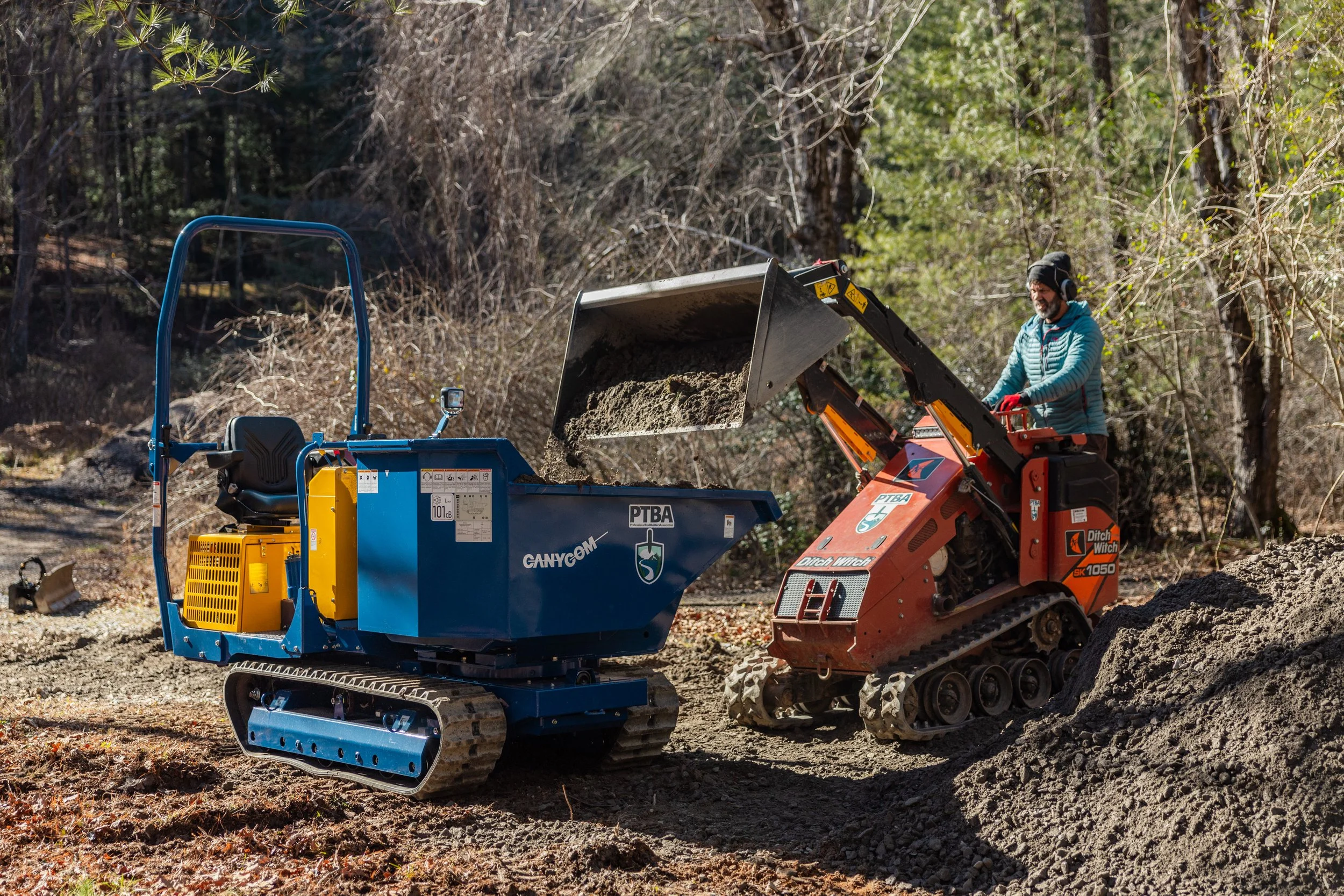
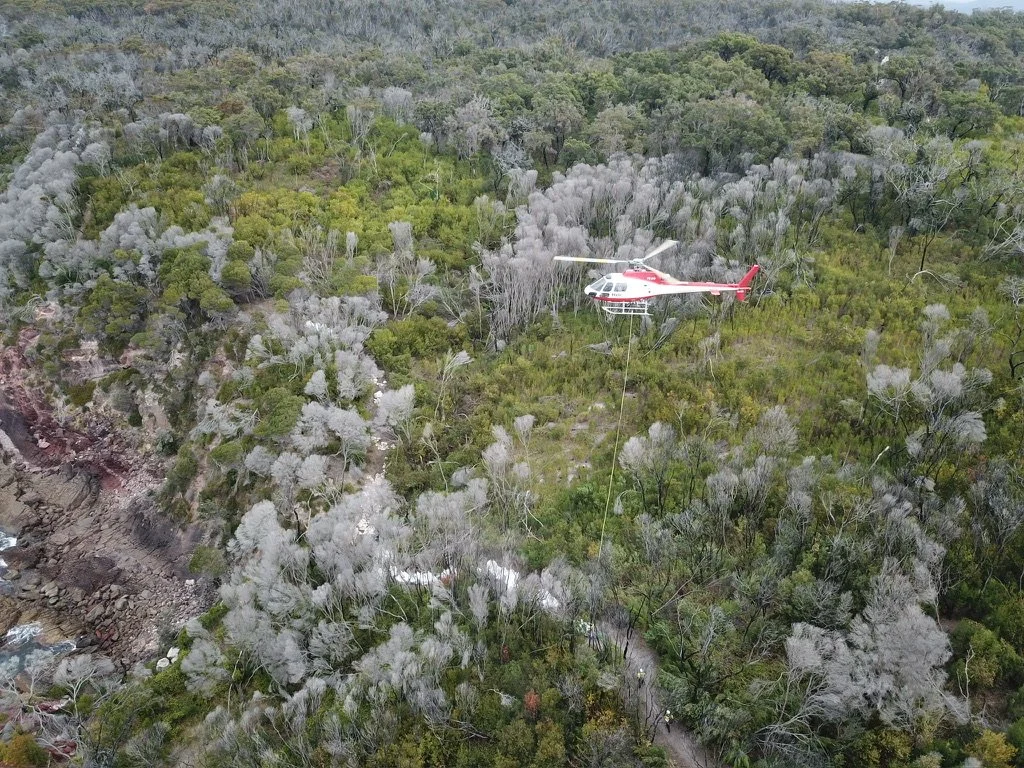
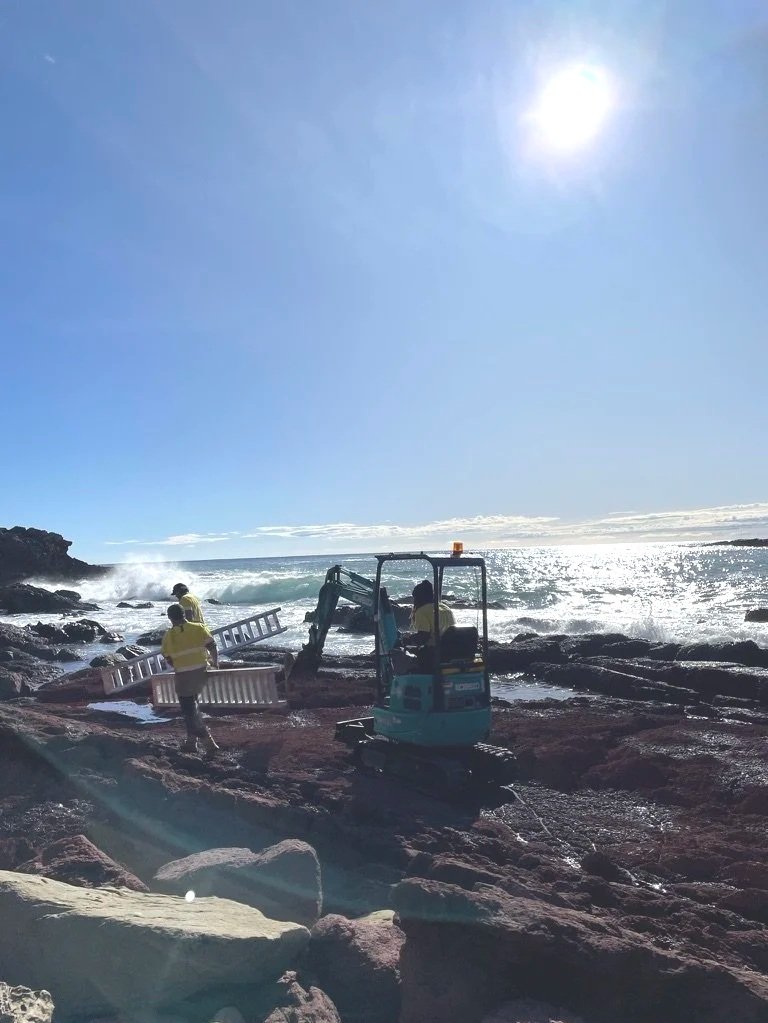
Photos: Long Cane Trails, CreativeLines
Trail Construction Can Include Many Types of Work
Depending on the project, work may involve:
Native-surface tread
Tread hardening and aggregate surfacing
Drainage features
Rockwork and retaining structures
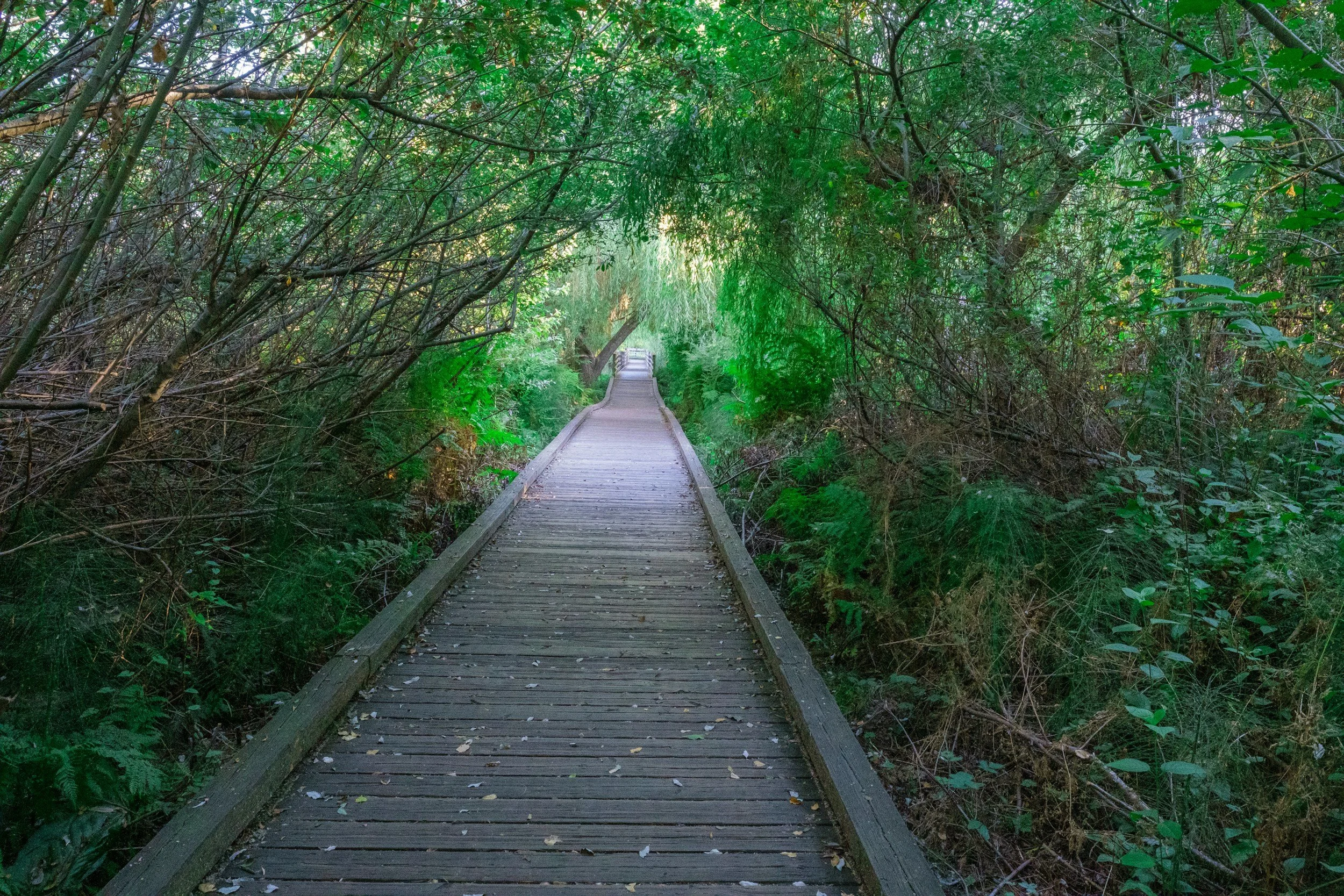
Bridges, boardwalks, and other structures
Specialty trail features
Site restoration and decommissioning
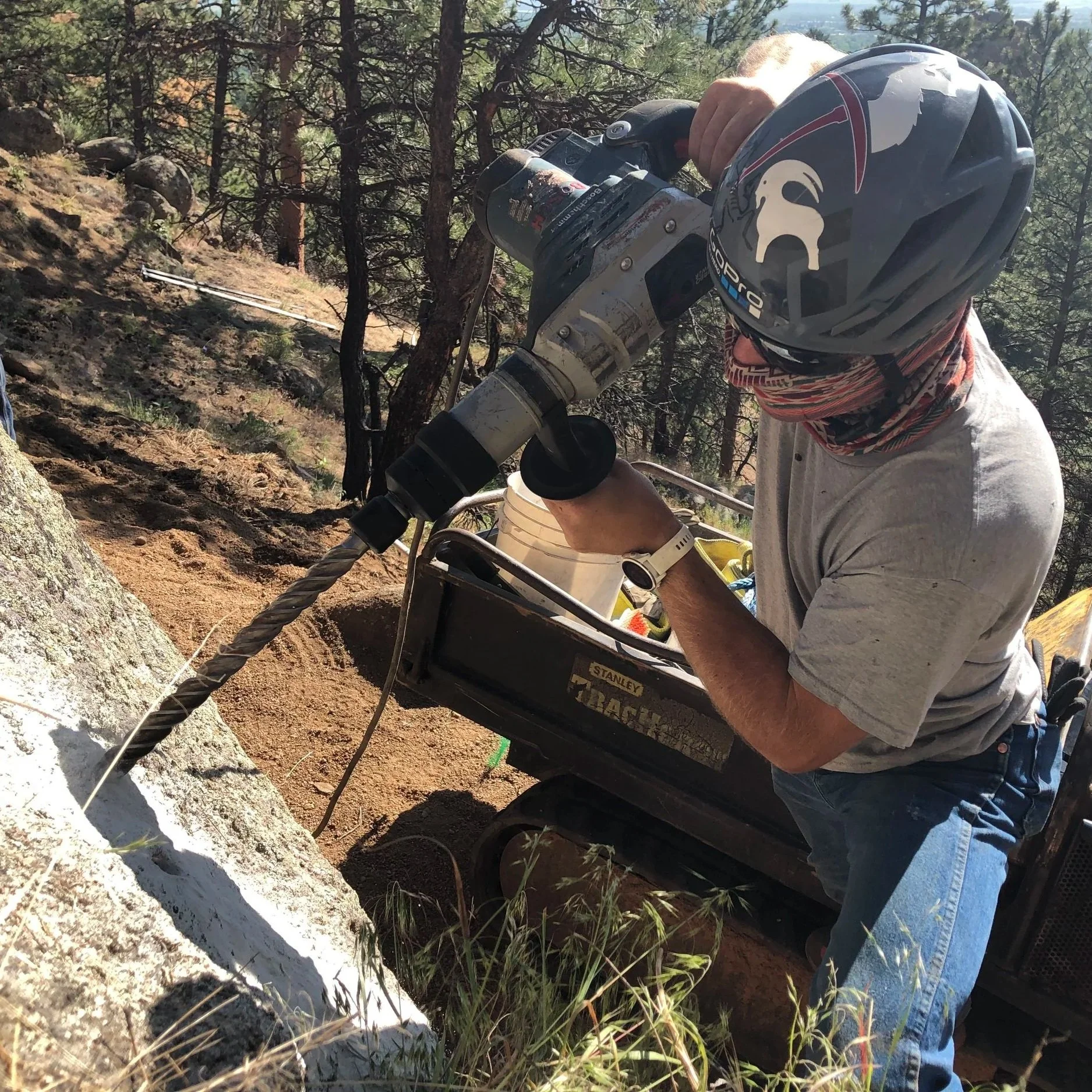
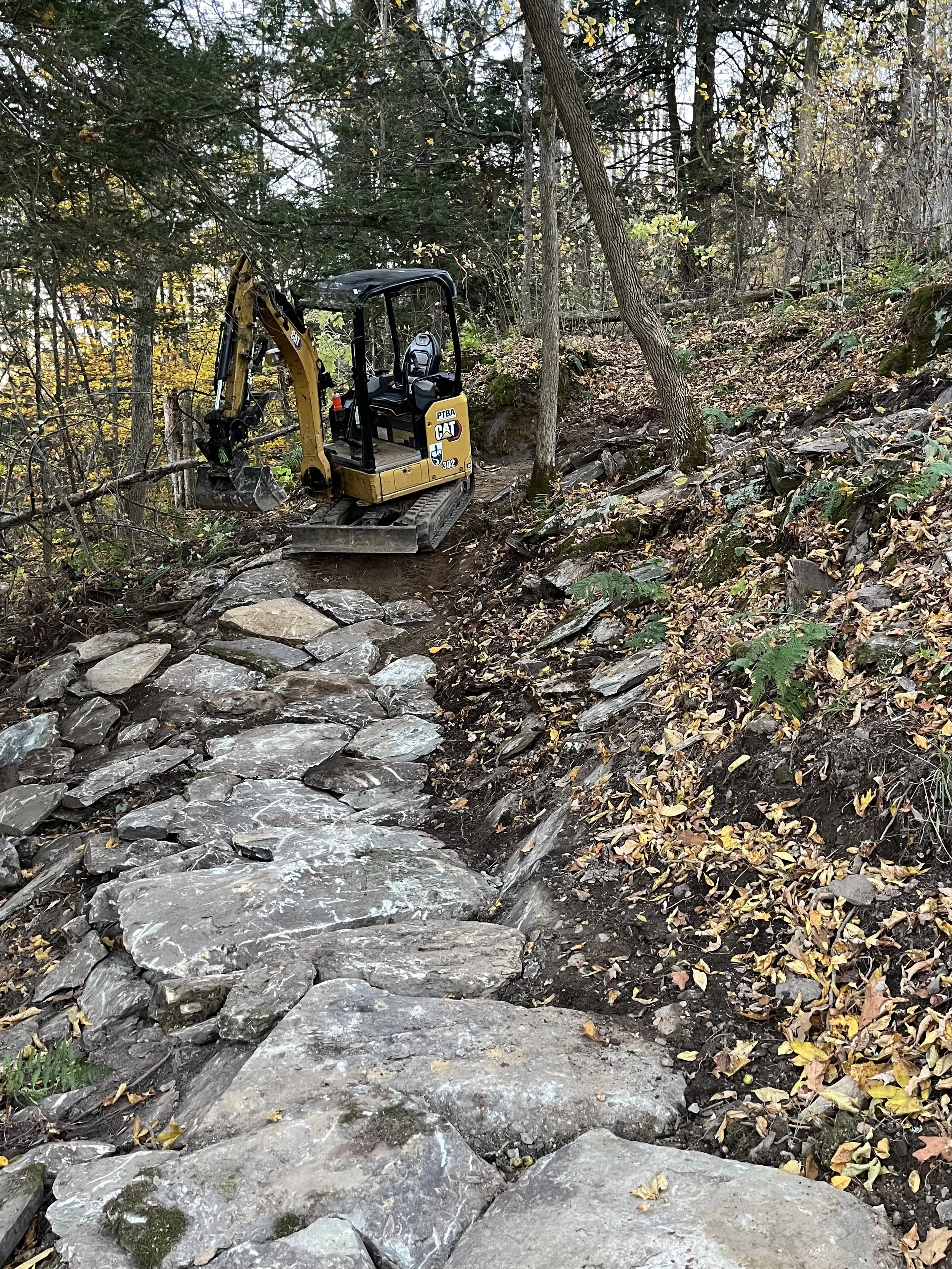
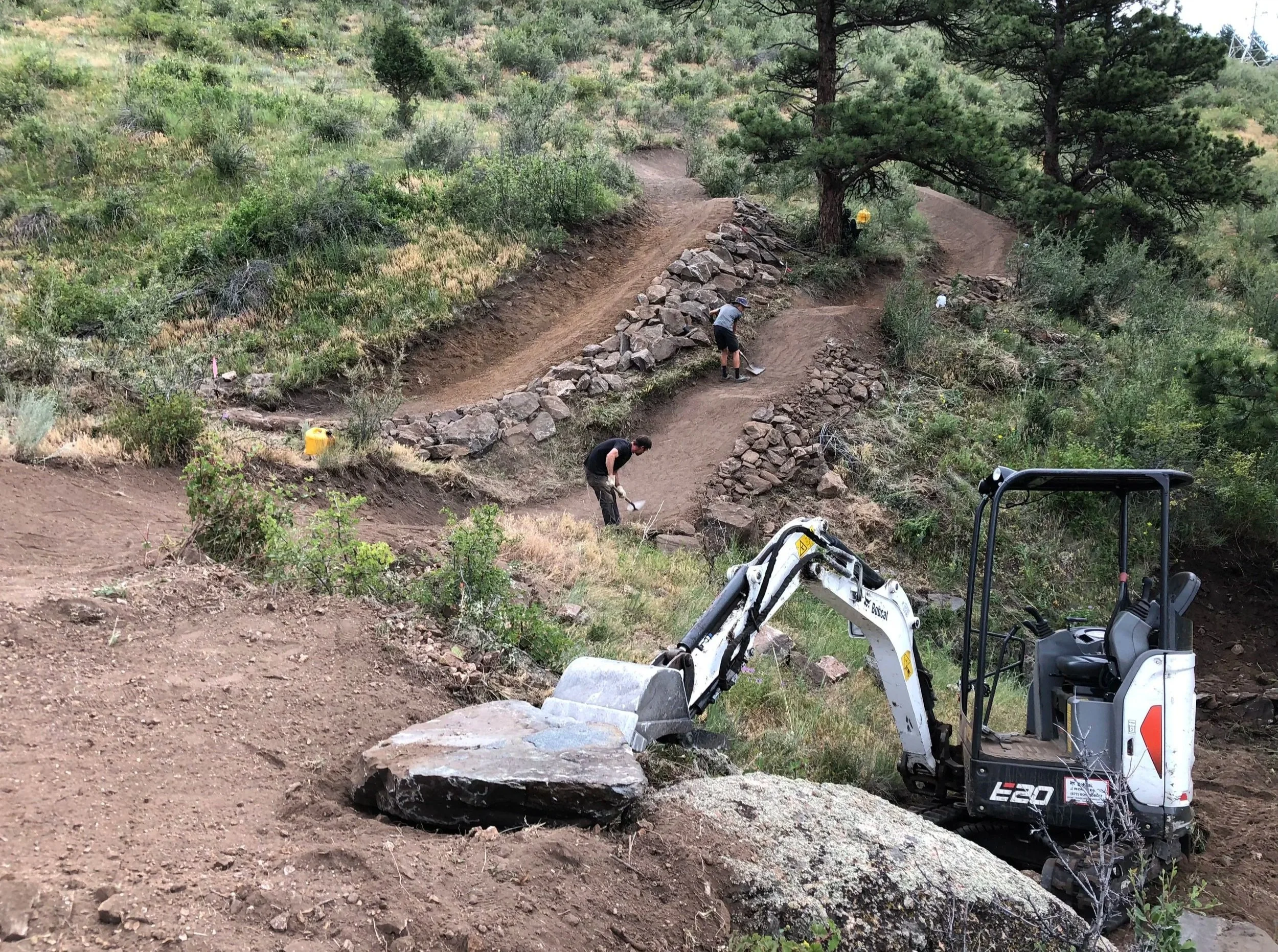
Photos: Town 4 Trail Services, Destination Trail, Tony Boone Trails, FlowRide Concepts
How Trail Construction Progresses
Trail construction generally progresses through a series of activities, although the sequence varies by project.
Preconstruction coordination: Reviewing plans, specifications, access, environmental requirements, and construction expectations.
Corridor preparation: Confirming the alignment, identifying areas to protect, and selectively clearing vegetation.
Tread construction: Excavating, shaping, and compacting the tread, including drainage and slope stabilization.
Structures and specialized features: Constructing rockwork, bridges, boardwalks, retaining structures, or other features.
Finishing and stabilization: Completing surfacing, drainage, erosion control, and restoration of disturbed areas.
These activities may overlap, with drainage, erosion control, and stabilization incorporated throughout construction.
Field-Fit Construction
Even with detailed plans and specifications, trail construction often requires field adjustments to respond to terrain, soils, rock, drainage, vegetation, and other site conditions.
The extent of allowable adjustments depends on the project design, specifications, approved corridor, and contract requirements. Some decisions can be made by the trail professional, while others require review or approval from the project owner, designer, or land manager.
Within these parameters, trail professionals may adjust alignments, grades, drainage features, or construction details to achieve the intended trail experience while minimizing disturbance. Clearly defining decision-making responsibilities before construction helps work proceed efficiently.
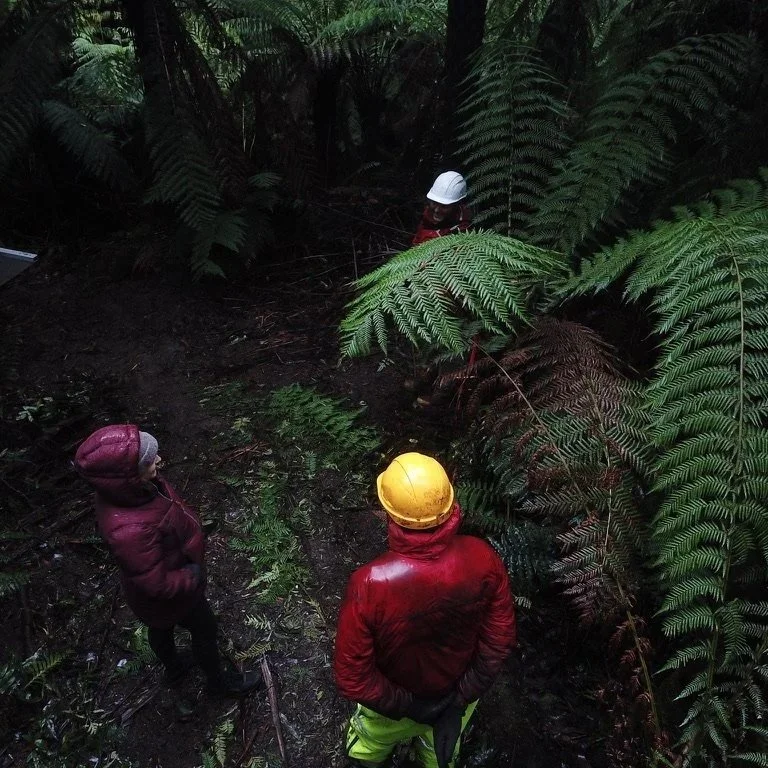

Photos: CreativeLines, Dirt Tek Trails
Factors That Can Affect the Construction Schedule
Trail construction schedules depend on more than trail length. Site conditions, access, construction methods, weather, and project requirements all influence how long the work takes. Several factors can affect construction schedules:
Weather and seasonal conditions: Rain, snow, extreme temperatures, saturated soils, wildfire conditions, and seasonal closures can limit when work can occur.
Terrain and ground conditions: Steep slopes, rock, unsuitable soils, drainage challenges, and unexpected subsurface conditions can affect construction methods and productivity.
Access, equipment, and materials: Remote locations, limited equipment access, staging constraints, equipment breakdowns, and material availability or delivery can affect progress.
Environmental requirements and approvals: Permits, seasonal restrictions, resource protection measures, inspections, and required approvals may influence when and how work proceeds.
Field adjustments and unforeseen conditions: Trail alignments, construction details, quantities, or methods may need to be adjusted in response to actual site conditions, sometimes requiring additional review or approval.
Crews, coordination, and project dependencies: Specialized crews, subcontractors, other contractors, owner-provided materials, and related work may affect sequencing and timing.
Realistic schedules should account for seasonal work windows, site conditions, access limitations, construction sequencing, and unforeseen conditions. Early coordination with qualified trail professionals can help identify scheduling challenges before construction begins.

Explore Trail Contracting Scope Items
Trail construction is highly site-specific. A clear scope gives prospective contractors the information they need to understand the work, site conditions, quantities, specifications, access, constraints, and where field decision-making may be needed.
The Trail Contracting Scope Guide provides detailed guidance for individual construction scope items, including specifications, owner-provided information, completed work, quality assurance, pricing considerations, and common contracting issues to avoid. Use it to identify what needs to be defined for your project.
Photo: TrailScapes