
Develop the Solicitation
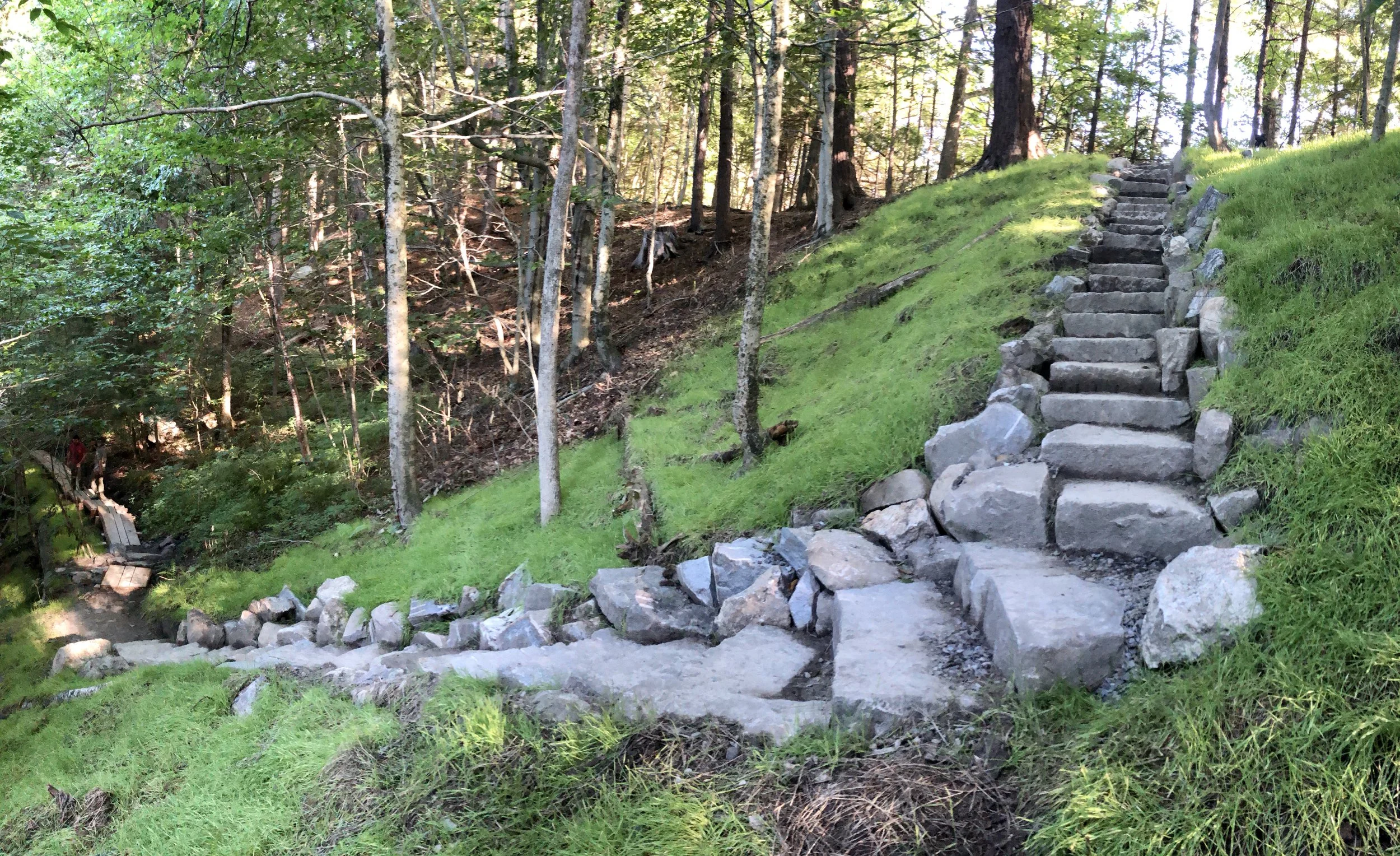
Photo: OBP Trailworks

The scope of work is the foundation of a successful solicitation. It should clearly describe the work to be performed, the desired outcomes, and the deliverables expected from the contractor.
Depending on the project, the scope may include planning, assessment, design, construction, maintenance, or a combination of services. It should distinguish between work the contractor will perform and responsibilities retained by the project owner or other partners. Whenever practical, trail construction should be clearly distinguished from unrelated work.
For construction projects, provide available planning and design documentation, such as master plans, trail alignments, construction drawings, specifications, and relevant permitting information. Bid items and quantities should reflect how professional trail work is estimated and performed, allowing contractors to develop accurate and comparable pricing.
The level of documentation needed will vary by project complexity and contracting approach. A clearly defined scope helps reduce uncertainty, establish realistic expectations, and support consistent evaluation of proposals or bids.
Communicate the Scope of Work and Deliverables
The scope of work is the foundation of a successful solicitation. It should be easy to locate and clearly describe the work to be performed, the desired outcomes, and the deliverables expected from the contractor.
Depending on the project, the scope may include planning, assessment, design, construction, maintenance, or a combination of services. It should distinguish between work the contractor will perform and responsibilities retained by the project owner or other partners. Whenever practical, trail construction should be separated from unrelated work.
For construction projects, provide available planning and design documentation, such as master plans, trail alignments, construction drawings, specifications, and relevant permitting information. Bid items and quantities should reflect how professional trail work is estimated and performed, allowing contractors to develop accurate and comparable pricing.
The level of documentation needed will vary by project complexity and contracting approach. A clearly defined scope helps reduce uncertainty, establish realistic expectations, and support consistent evaluation of proposals or bids.

Resource: Trail Contracting Scope Guide
Developing a scope of work? PTBA's Trail Contracting Scope Guide provides detailed considerations for planning, design, construction, and maintenance services, including owner-provided information, deliverables, pricing considerations, and common contracting issues.
Organize the Solicitation for Clarity and Usability
A well-organized solicitation helps contractors quickly understand the project and prepare accurate, responsive proposals or bids.
Lead with a project summary. Include the scope of work, location, key deliverables, schedule, and major requirements near the beginning.
Make information easy to find. Clearly identify the scope of work and organize supporting plans, specifications, maps, and other resources so contractors don't have to search through lengthy documents.
Keep documentation proportional to the project. Avoid unnecessary duplication, excessive requirements, and overly complicated solicitation packages.
Use trail-appropriate documents and specifications. Trail construction is field-based work involving variable terrain, soils, drainage, and site conditions. While some elements may require engineering, avoid using building or conventional civil construction templates that introduce irrelevant requirements.
The goal is to provide enough information for accurate, comparable proposals without creating unnecessary complexity.
Communicate Project Information and Requirements
Provide the information contractors need to understand project conditions, assess requirements, and prepare accurate proposals or bids. Requirements should be clearly stated and appropriate for the project's scope and complexity.
Project background and partners: Describe the project location, history, goals, funding partners, and other organizations involved.
Site conditions and access: Identify known terrain, environmental conditions, access limitations, staging areas, and other factors that may affect the work.
Available plans and resources: Provide relevant maps, GIS data, planning and design documents, specifications, assessments, and other supporting information.
Permitting and approvals: Identify required permits, environmental reviews, and other approvals, including their current status and who is responsible for obtaining them.
Insurance and bonding: Clearly identify required insurance coverage, limits, and any bonding requirements. These are typically established by the project owner or contracting agency, and some projects may not require them. Where flexibility exists, use common, industry-appropriate limits that reflect the project's scope and risk.
Proposed contract terms: Include the draft contract or applicable standard terms and conditions when available. Clearly identify requirements related to payment, change orders, warranties, retainage, indemnification, and other provisions that may affect contractor pricing or participation.
Other contract requirements: Identify applicable licensing, qualifications, subcontracting restrictions, or other conditions contractors need to consider before submitting a proposal.
Additional resources:
See the permitting and compliance information in PTBA's Trail Project Life Cycle.
See the Insurance + Bonding section of PTBA's Trail Company Going Pro resource.
Establish Realistic Schedules and Site Access
Trail projects are highly seasonal, and successful contracting requires planning around both contractor availability and site conditions. Providing adequate notice and realistic timelines helps attract qualified contractors and supports accurate proposals, effective fieldwork, and successful project delivery.
Advertise projects early. Many professional trail contractors are small businesses with limited estimating capacity and are booked at least one field season in advance. Plan solicitations well ahead of the anticipated work and avoid short response periods during peak construction season.
Allow adequate time for proposals and bids. Consider project complexity, required site investigations, and the time needed to develop accurate estimates.
Pre-bid meetings and site visits: Provide opportunities for contractors to ask questions, review site conditions, and better understand the scope of work. Clearly state whether meetings or site visits are mandatory or optional, along with dates, locations, access instructions, and attendance requirements.
Consider seasonal conditions for planning and design. Leaf-off conditions can improve visibility for trail alignment and design, while wet seasons may be important for identifying drainage patterns, seasonal waterways, and other site constraints.
Account for environmental review timelines. Some resource surveys, environmental assessments, or permitting processes require work during specific seasons or observations across multiple seasons.
Establish realistic project timelines. Account for mobilization, seasonal restrictions, weather, material procurement, permitting, and the actual duration of the work.
Clarify site access and scheduling constraints. Identify access restrictions, allowable work periods, coordination with other crews or site users, and fixed completion deadlines.
Unrealistic schedules or limited opportunities to assess site conditions can discourage qualified contractors from bidding or result in higher pricing to account for uncertainty.
Define Proposal Requirements
Clearly identify what contractors must submit and how proposals or bids should be organized. Requirements should reflect the type of work, project complexity, and solicitation method, while avoiding unnecessary documentation that creates additional work for both contractors and reviewers.
Common proposal requirements may include:
Project approach: How the contractor proposes to complete the work, including methods, schedule, and anticipated challenges.
Qualifications and experience: Relevant company experience, similar projects, and demonstrated capabilities.
Project team: Key personnel, their qualifications and responsibilities, and any proposed subcontractors.
References: Contact information for clients on comparable projects.
Pricing: Required pricing format, such as lump sum, unit prices, or time and materials, with clear instructions for presenting costs and assumptions.
Submission instructions: Required documents, format, page limits, submission method, and deadline.
Questions and clarifications: Identify a point of contact, deadline for questions, and process for issuing clarifications or addenda. Share responses with all prospective bidders to ensure consistent information.
Keep proposal requirements proportional to the project. A small, clearly defined trail construction project should not require the same level of documentation as a complex, multi-year planning or construction effort.
Pricing and Payment Structure
Clearly specify how contractors should present pricing and identify the anticipated contract payment structure. The appropriate approach depends on how well the scope is defined, site conditions, and the level of uncertainty involved.
Common construction pricing approaches include:
Lump Sum: A fixed price for a defined scope of work. Best suited to projects with clear requirements and limited uncertainty.
Unit Price: Payment based on actual quantities completed at agreed rates, such as linear feet of trail, square feet of armoring, or individual trail features.
Guaranteed Maximum Price (GMP): Establishes a maximum allowable cost, subject to the agreed contract terms and scope changes.
Time and Materials / Cost Plus: Payment based on documented labor, equipment, materials, and other allowable costs. Useful when quantities or conditions cannot be fully determined in advance.
Day Rates: Agreed rates for crews or equipment over a specified period, often used for smaller or variable-scope work.
Clearly communicate payment schedules, invoicing requirements, retainage, mobilization payments, and any funding-related payment restrictions that may affect contractor pricing or participation.
Explain the Evaluation and Selection Process
add this info
Next Step:
Develop the Solicitation
Once you've identified the appropriate contracting approach and procurement method, the next step is to develop a solicitation that clearly communicates the project's scope, requirements, and expectations.